
A New Code for Copyrighting Code?
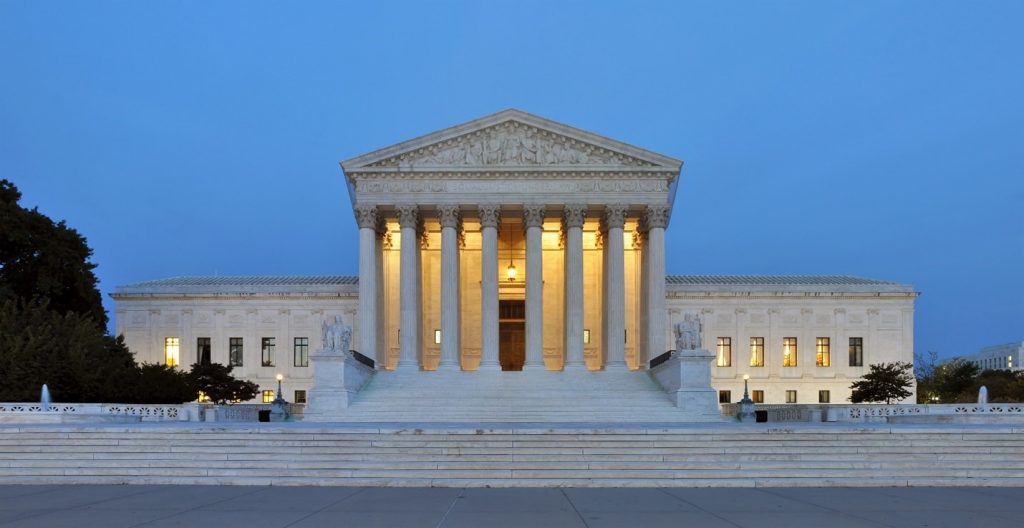
[Photo credit: Joe Ravi; CC-BY-SA 3.0]
By Gage M. Meyers, Of Counsel
The Supreme Court rarely hears an intellectual property case, especially between two high-profile litigants. For that reason, Google v. Oracle has created rumblings throughout the IP and tech industries. But what was this case about?
Oracle currently owns Java SE, a programming software originally developed by Sun Java. In 2005 Google acquired Android, planning to create a new software platform for mobile phones. At the time, Java SE was a popular programming language used by countless programmers. To make their new Android system more appealing and usable by these programmers, Google copied roughly 11,500 lines of code from the Java SE program. These lines of code were from Java’s Application Programming Interface (API). Oracle sued Google for copyright infringement, and the case has been bouncing between district and appellate courts ever since.

What are APIs?
APIs can be understood as three separate components: implementing code, method calls, and declaring code. Implementing code tells the computer how to perform a task. Method calls, in turn, provide guidelines for which implementing the program to use. Lastly, declaring code acts as an organizational structure: labeling and organizing tasks, methods, packages, and classes. Declaring code creates an association between a method call and a particular location in your computer.
Here, only Sun Java’s declaring code is at issue.

[Photo credit: Alper Çuğun; CC BY 2.0]
What is Fair Use?
Generally, the purpose behind copyright law is to advance the arts and sciences while temporarily giving authors exclusive rights to their creations. Fair use, in turn, is a legal defense allowing for the unlicensed (i.e., unpermitted) use of a copyrighted work for specific purposes. These purposes include “criticism, comment, news reporting, teaching (including multiple copies for classroom use), scholarship, or research,” but this list is not exclusive. Copyright law lays out a four-factor balancing test to determine if a particular case is a fair use.
The court considers:
1) the purpose and character of the use;
2) the nature of the copyrighted work;
3) the amount and substantiality of the portion used in relation to the copyrighted work as a whole; and
4) the effect of the use upon the potential market for or value of the copyrighted work.

[Image credit: Nick Youngson; CC BY-SA 3.0]
Was Google’s Copying of Sun Java’s API Fair Use?
The Supreme Court held that Google’s copying was fair use. In their analysis, the Court noted that Google copied Sun Java’s API to build upon it and develop a new system (Factor 1). This, the Court reasoned, goes to the heart of copyright law: to advance the arts and sciences.
Even though the software is copyrightable, Sun Java’s declaring code is different from other kinds of protected works. This is because declaring code is intimately intertwined with uncopyrightable elements: a computer’s ability to perform tasks and organize data. Because of this, there is less creativity worth protecting when only declaring code is copied (Factor 2). While the Supreme Court provides numerous reasons to support their finding of fair use, these two reasons are the strongest.

[Image credit: Randy Micheletti/Incubate IP]
What Does This Mean for You?
For most entrepreneurs, this ruling will not change the way you grow your businesses. Many of the traditional copyrighted works (film, art, music, etc.) are still protected. This case only significantly impacts programmers, at least according to the Supreme Court. Declaring code now has weaker copyright protection than other types of software. For programmers looking to develop software or programming languages, this case will have huge effects. It may be prudent to place greater time, money, and resources into your implementing code, which requires a preferred (i.e., protected) form of creativity.

[Photo credit: Randymcking; CC BY-SA 3.0; cropped]
CONTACT INCUBATE IP
There are many options for types of copyright protection, and strategies for obtaining that protection. We at Incubate IP can help with all your trademark, copyright, and patent needs. For more information, feel free to call us at (312) 600-5412 or send us a message via this Contact Us form and we will respond within 24 hours.